
Newsletter Subscribe
Enter your email address below and subscribe to our newsletter
Enter your email address below and subscribe to our newsletter


When dealing with a hard question in mathematics, one has to consult the textbook, wait till office hours, or search through various sample questions. In the future, one will be able to consult AI about the explanation of the equation,…
 ByJohn A
Table of Contents ▸ 1. HealthKit vs Health Connect: What Are You Actually Integrating With? ▸ 2. Why Does the Google Fit Sunset Force a Decision in 2026? ▸ 3. How Do Permissions and Data Sync Work on Each Platform?…
ByJohn A
Sports fans don’t just wander around while a game is on. A goal, a wicket, the film cut, an injury, a return, a final minute twist and attention is diverted from the screen to the search bar in a split…
ByJohn A
Cryptographic proof systems formalize how one party convinces another of a statement’s truth under soundness and completeness, without exposing unnecessary data. They encompass interactive, non-interactive, and zero-knowledge variants, each with distinct trust and privacy guarantees. The landscape ranges from succinct…
 ByJack
Cryptocurrency market structure can be defined by how venues, participants, and mechanisms interact to form prices and liquidity. Depth from liquidity pools and order books reveals path-dependent resilience and microstructure signals. Market makers inject two-sided liquidity, increasing price formation tempo,…
ByJack
Automation creates self-running systems by embedding autonomous components that act with minimal human input, guided by clear logic, data, and feedback loops. These systems aim for repeatable, measurable performance and predictable outcomes, underpinned by disciplined architectures, modular interfaces, and guardrails.…
ByJohn A
Automation is accelerating digital workflows and reshaping demand for data interpretation, process optimization, and scalable systems. Work becomes modular, merging human judgment with automated capabilities while machine literacy rises. Talent must be portable, adaptable, and data-driven, with continuous, evidence-based upskilling.…
ByJohn A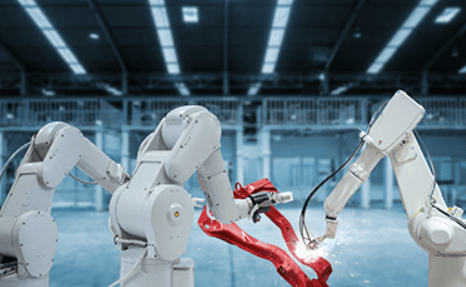
Automation is reshaping how work is organized, measured, and improved. Machines handle repetitive, precise tasks while humans focus on higher-value activities within clear, collaborative workflows. The ROI of automation varies, highlighting the need for disciplined change management, modular deployments, and…
ByJohn A